
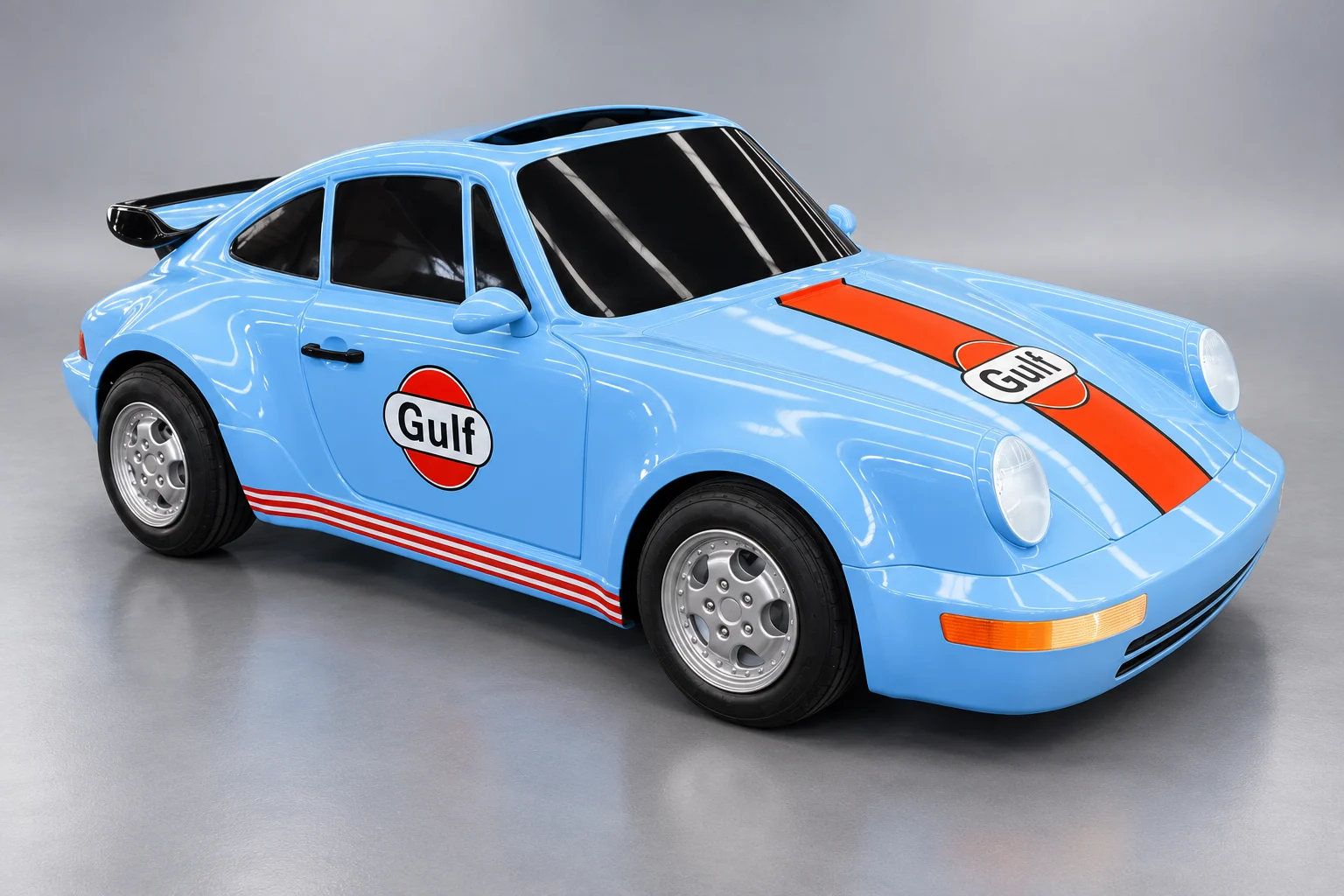
What Is a Junior Car?
A junior car is a compact, drivable vehicle designed to offer a car-like form or driving experience at a smaller scale. Depending on the model, that can mean automotive-inspired bodywork, a seated driving position, steering and braking controls, and an electric or other specified power system. No single feature defines every vehicle sold under the term.
The phrase is used across different products and projects. It may describe a small recreational vehicle, a half-scale-style replica, a compact sports-inspired car, a drift-focused vehicle for a controlled setting, or a customized display or commercial fleet vehicle. These labels explain a design direction; they do not replace a model’s drawings, operating instructions, technical specification or legal classification.
For procurement, treat “junior car” as the beginning of a product conversation. Ask what the vehicle is designed to do, who it is designed to fit, where it is expected to operate, and what supporting documents are supplied. Then compare those answers against the needs of the driver, venue, project or collection.
Why Does the Junior Car Category Exist?
A compact vehicle can serve a different purpose from a full-size car while retaining familiar automotive cues. Buyers may be looking for a scaled design, a hands-on recreational vehicle, a branded project, an attraction for a venue, or a platform to discuss with a manufacturer. The category brings those questions together, even though the final vehicle configurations can differ substantially.
That variety is useful, but it makes direct comparisons easy to get wrong. Two vehicles can share a similar silhouette yet differ in dimensions, control arrangement, construction, power source, recommended operating environment and support model. A photograph or product name cannot answer those questions.
A better comparison starts with the job the vehicle needs to do. A private owner, collector, dealer and entertainment-venue operator may all use the phrase “junior car” while evaluating different priorities. Write down the setting, expected drivers, usage pattern, storage, maintenance capability and delivery constraints before comparing options.
How Is a Junior Car Different From a Ride-On Car?
“Ride-on car” often refers to a simple toy or recreational product, while “junior car” is commonly used for a more vehicle-like compact product or project. That distinction is only a browsing shortcut: manufacturers use category names differently, and the name alone does not tell you how a specific vehicle is built or operated.
When comparing the two, look at the documented design and use rather than assuming that one label implies a particular speed, age range, construction quality or level of safety equipment. Confirm who the manufacturer says the vehicle is for, how it is controlled, what surfaces and environments are intended, what maintenance is expected, and which instructions apply.
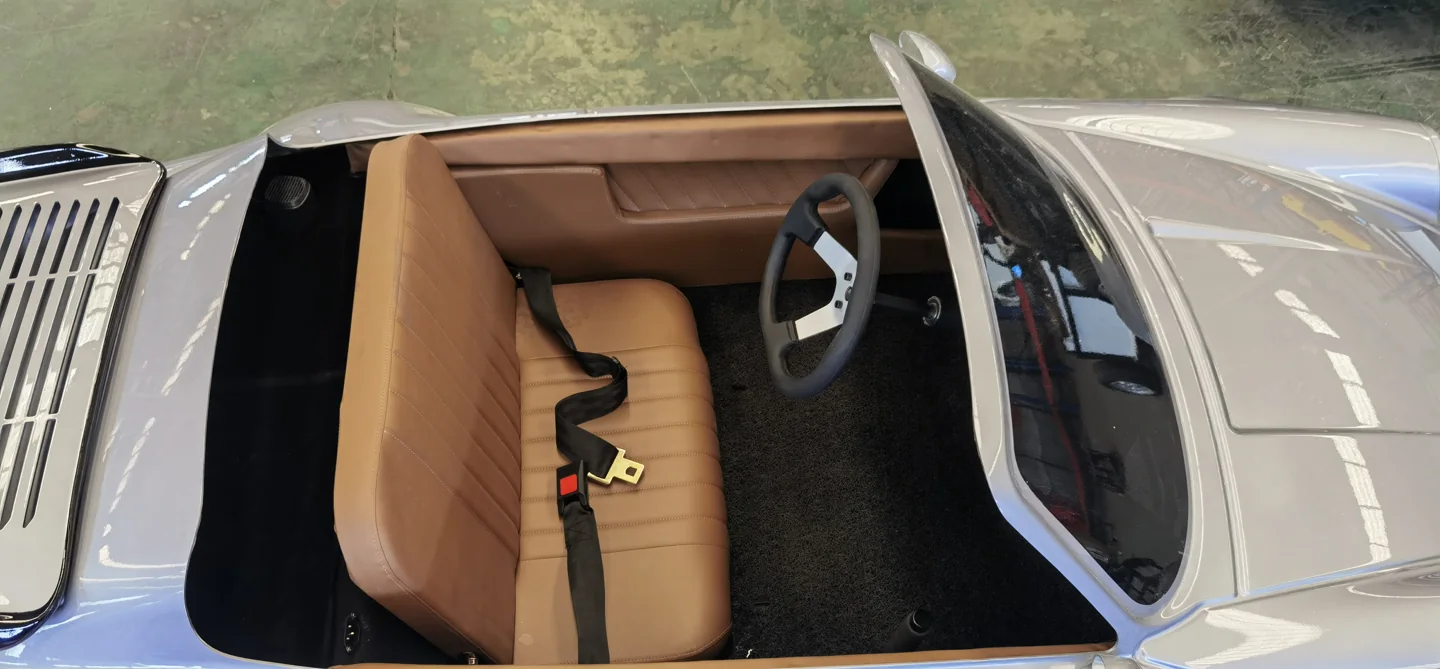
Junior Car vs Go-Kart: What Is the Difference?
The practical difference is usually the design brief and presentation, not a universal rule. A junior car may emphasize automotive-style bodywork or a compact car-like experience; a go-kart often emphasizes an open chassis and a karting-oriented driving setup. Product designs overlap, so verify the specific vehicle rather than relying on a category name.
| Area | Junior car (typical emphasis) | Go-kart (typical emphasis) |
|---|---|---|
| Visual design | May use enclosed or automotive-inspired bodywork | Often presents more of the chassis and running gear |
| Driving experience | May be styled around a car-like seating and control experience | Often organized around karting-style steering and seating |
| Product naming | A broad commercial description used across several designs | A broad recreational or motorsport-related description |
| What to verify | Dimensions, driver position, controls, intended setting and documentation | Chassis layout, controls, intended setting and documentation |
On narrow screens, scroll horizontally to view every column.
Neither name tells you which vehicle is better for a particular buyer. A compact car-style body may suit one project’s visual brief, while an open design may suit a different operating plan. For a venue, also consider how operators will supervise use, check vehicles between sessions, manage storage and obtain replacement parts. Those are project questions, not conclusions that can be drawn from the label.
If you are comparing two quotations, ask both suppliers to state the same facts in the same units: overall length and width, driver-space measurements, control arrangement, powertrain, included equipment, intended setting, service items and warranty terms. Then compare like with like.
What Systems Does a Junior Car Have?
The exact system list depends on the vehicle. A buyer may need to understand the structure that supports the body, steering and braking arrangements, seating and controls, wheels and tires, power source, drive components and any charging equipment. A vehicle intended for a display project may have a different brief from one intended for repeated operation.
Ask the manufacturer for a configuration-specific overview rather than assuming that a familiar-looking dashboard or engine cover identifies what is inside. If the quote includes optional equipment, request a clear list of what is standard, what is selected for the project, and what still needs confirmation.
- What is included in the quoted configuration?
- Which dimensions describe the complete vehicle, and which describe a component or body shell?
- What operating and maintenance documents are supplied?
- Which parts are model-specific, and how are replacements identified?
- What changes if the intended driver, environment or duty cycle changes?
For a deeper look at requirement review, development and system integration, continue to Junior Car Engineering. For short direct answers to common owner and buyer questions, use the FAQ library.
Are Junior Cars Electric?
Some junior cars use an electric powertrain, while other products or project configurations may use a different power source. Confirm the exact model instead of inferring its system from a product-family name or a photograph. For an electric configuration, request the approved documentation for the battery, charger and vehicle together.
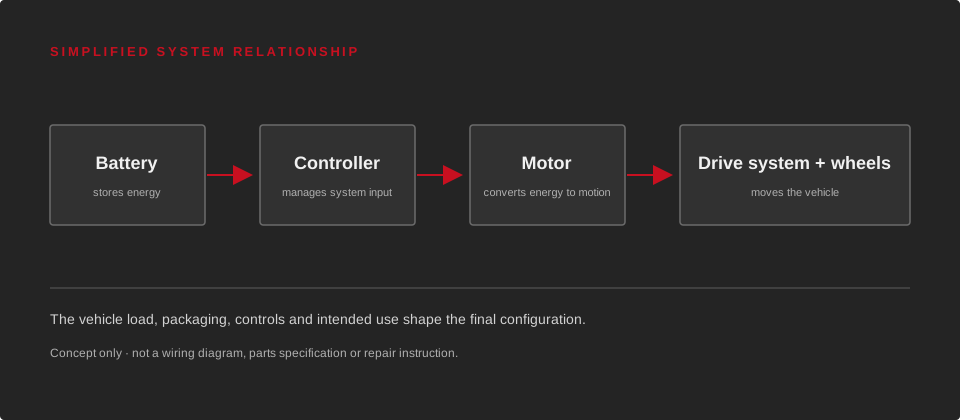
Energy and control flow in a generic electric-vehicle concept. The diagram is not a wiring diagram and does not specify components.
At a high level, stored electrical energy is managed by a controller and used by a motor; a drive system transfers motion to the wheels. The real configuration also depends on the vehicle’s load, packaging, wheel size, intended operation and control strategy. This overview is for buyer understanding only; installation, diagnosis and repair should follow the exact manufacturer documentation and qualified service guidance.
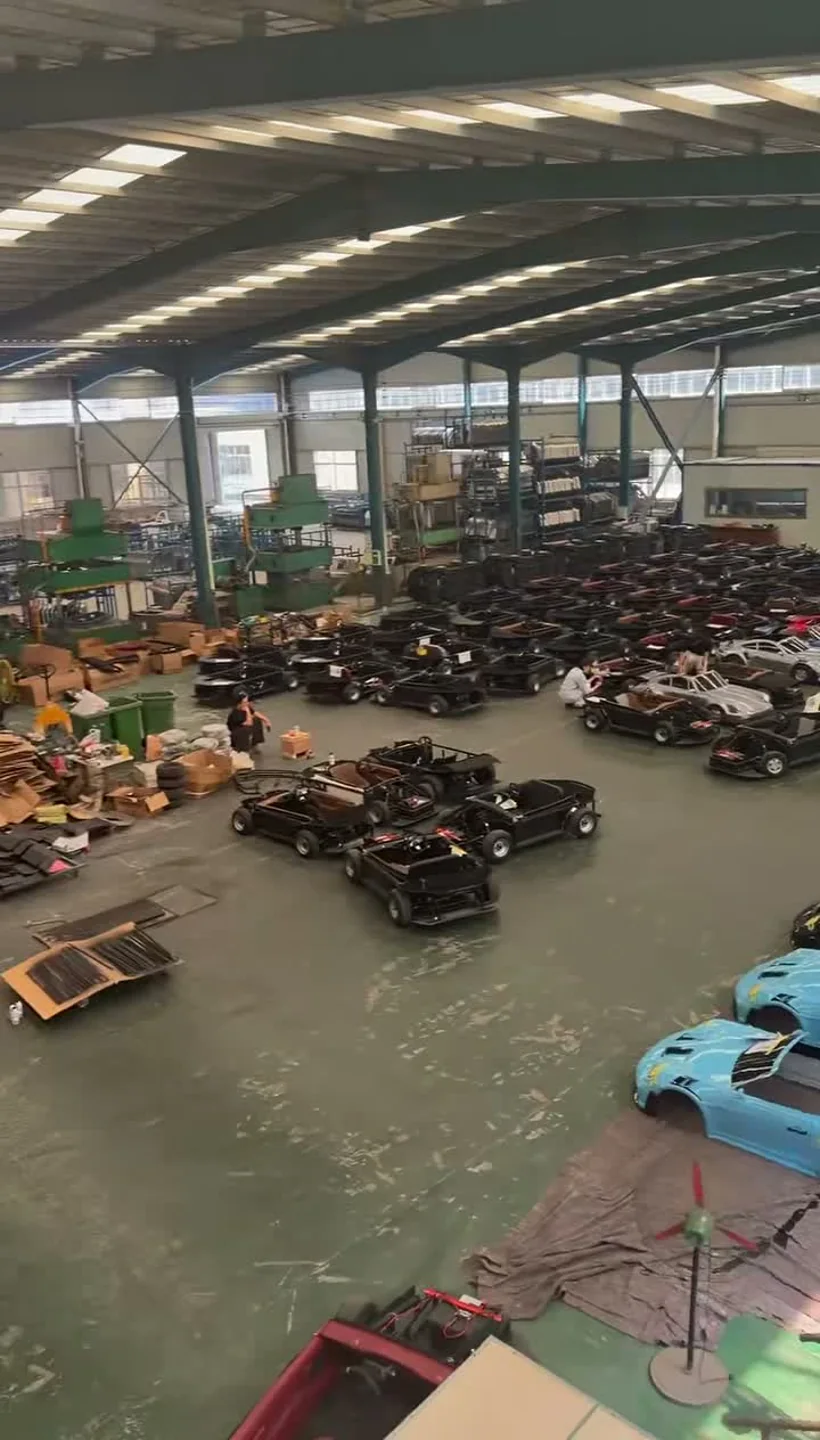
Can Adults Drive Junior Cars?
Some compact vehicles may be designed around adult drivers, while others may not accommodate a particular adult. “Junior” does not answer the question. Fit is model-specific and should be confirmed before purchase, demonstration or commercial use.
Request the relevant dimensions and ask how the manufacturer assesses driver fit. The useful questions include seat position, legroom, access, steering-wheel relationship, pedal reach and clearance in the driving position. A drawing is a starting point; where possible, have the intended driver evaluate the exact vehicle under the manufacturer’s stated process.
Do not rely on a person sitting beside a car for scale, on an image, or on the phrase “adult size.” If a vehicle is for a venue or shared fleet, consider the range of intended users and the operator’s screening procedure. Follow the supplied instructions and applicable local requirements.
What Are Junior Cars Used For?
A compact car-style vehicle may be considered for private-property recreation, a collection or display, brand and event projects, dealerships, or an entertainment venue. These are examples of project contexts, not a statement that every model is suited to each setting.
The setting changes the questions. A private buyer may focus on fit, storage and support. A venue operator may also need to plan supervision, session flow, charging or refueling arrangements, cleaning, inspection, spare parts and downtime. A dealer may focus on model consistency, market fit, documentation and after-sales readiness. An event or brand project may have a separate presentation brief.
Before selecting a vehicle, write a short use brief: who will use it, where it will be used, how often, who will operate or supervise it, and what support is available. Share that brief with the supplier so the proposed model and any requested customization can be evaluated against the actual application.
How Fast Are Junior Cars?
There is no single speed that describes every junior car. A stated figure, when supplied, applies to a specific model and configuration under stated conditions. It should not be inferred from body style, motor size, a video clip or another vehicle in the same category.
If speed matters to your decision, ask the supplier for the approved figure and how it was determined. Clarify whether the value is a maximum, a configured operating setting or a test observation; which vehicle load, surface and battery conditions apply; and whether the value can vary between configurations. For a venue, ask how the operating plan and supervision relate to the selected model.
A higher number is not automatically a better match. Fit, control, braking, intended environment, operator capability and applicable rules all matter. Do not modify a controller or bypass a limit to pursue a performance figure; changes can alter system behavior and may invalidate instructions, warranty terms or approvals.
Are Junior Cars Road Legal?
Do not assume that a junior car can be driven on a public road. Whether a particular vehicle may be used on a road depends on its exact design, configuration, documentation and the rules that apply where it will be operated. A road-like appearance, lighting or a seller’s category name does not establish legal status.
Before planning any public-road use, ask the manufacturer for the vehicle’s classification and available compliance documents, then confirm requirements with the relevant local transport, registration and import authorities. A product statement is not a substitute for an authority’s decision. If the intended use is on private property or at a venue, confirm site rules, insurance and operator requirements as well.
What Types of Junior Cars Are Available?
Product pages often group vehicles by design or application. These groupings help with discovery, but they are not mutually exclusive technical classes. One vehicle can combine several ideas, and the exact configuration still needs to be checked.
- Electric junior cars: compact vehicles described around an electric powertrain; confirm the battery, charger, controls and configuration for the model.
- Half-scale cars: vehicles or projects presented around a reduced-scale design; ask which reference dimensions are used rather than assuming an exact mathematical scale.
- Mini sports cars: a design direction that may emphasize a compact sports-car appearance or driving brief; verify the actual equipment and intended environment.
- Electric drift cars: products positioned for controlled drift-oriented use; review the manufacturer’s operating instructions, surface and supervision requirements.
- Custom and OEM junior cars: projects where appearance, branding or technical requirements may be adapted; separate cosmetic changes from system or fit changes.
- Commercial and venue vehicles: selections made around an operator’s fleet, site, support, storage and operating workflow.
Explore the related electric junior car, half-scale, mini sports and electric drift categories when you are ready to compare a specific product direction. The category pages help you narrow the brief; the model documents still determine what is included.
What Should You Check Before Buying?
Treat a quote as the start of verification, not the end. Ask the supplier to identify the model and configuration, explain which details are confirmed and which remain options, and provide the documents that support the intended use. For a customized project, keep the approved design brief and the final build specification aligned.
- Driver fit: exact dimensions, access and control reach for the intended driver or user group.
- Vehicle: body and overall dimensions, configuration, controls, operating environment and included equipment.
- Power system: approved system description, charger compatibility, operating instructions and service path where applicable.
- Support: spare-parts identification, warranty terms, maintenance documents and the process for technical questions.
- Project: quantity, customization scope, artwork approval, packaging and delivery requirements confirmed in writing.
- Location: current import, registration, site and operating rules checked with the relevant authorities or qualified advisers.
For a venue or dealer, add a practical operating review: who receives the vehicles, who checks them, where they are stored, how issues are reported and how replacement parts are ordered. The answers help compare total project readiness without assuming a particular fleet result or service arrangement.
What Buyers Often Overlook
- Choosing from top speed or motor power alone instead of reviewing the full vehicle configuration.
- Assuming that an adult or child will fit because the vehicle looks large enough in a photo.
- Treating a similar-looking charger as compatible without matching the approved documentation.
- Assuming that road access, a permit or a certification is included because the vehicle has car-like features.
- Discussing parts, maintenance, warranty or shipping only after an order has been placed.
- Comparing customization quotes without separating visual changes from changes that affect fit, controls or vehicle systems.
Most of these issues can be reduced by turning assumptions into written questions. Ask for the model-specific answer, save the document that supports it, and have unresolved points confirmed before committing to a configuration or delivery plan.
Junior Car Buyer Checklist
Use this checklist to structure a supplier conversation. It is a planning aid, not a substitute for the vehicle manual, technical review or local approval.
BUYER CHECKLIST
09 POINTS
Planning aid only. Confirm every requirement against the exact model and location.
Copy the list into your project notes, then mark each point as confirmed, open or not applicable. If a supplier cannot answer a model-specific question immediately, record who will confirm it and when; do not fill the gap with an assumption.
A Manufacturer’s Perspective: Evaluate the Whole Vehicle
From a manufacturing perspective, a compact vehicle is a connected package. Body proportions, driver position, steering and braking layout, structural packaging, power components and service access influence one another. A change that appears visual can affect clearances or visibility; a change to driver fit can require a wider review of seating, controls and the surrounding structure.
That is why a good project brief distinguishes the outcome the buyer wants from the change being requested. “Make it fit an adult” is an outcome; the supplier still needs to review measurements and interfaces. “Make the vehicle faster” is an outcome; it does not identify an approved configuration or establish that the vehicle remains suitable for its setting.
For a buyer, the practical result is straightforward: define use, driver, environment and support requirements first. Then ask the supplier to map each requirement to a documented feature or an open engineering question. This creates a clearer basis for selection and approval without relying on unverified figures.
How to Choose Your Next Step
A first-time buyer can start by comparing vehicle formats and driver fit. A collector or brand team can describe the proportions, finish and project context they want to explore. A dealer can add local demand and support readiness. A venue operator can document site layout, operating pattern and supervision responsibilities.
In each case, keep the next step proportionate: shortlist a category, review the relevant product page, request model-specific documentation, and record anything that still needs confirmation. If a custom request affects a vehicle system or driver fit, include that in the initial brief so it can be reviewed before a final configuration is proposed.
This guide is a category-level introduction, not a product approval or a recommendation for a particular driver, location or legal use. The exact model documents and current local requirements should guide the final decision.